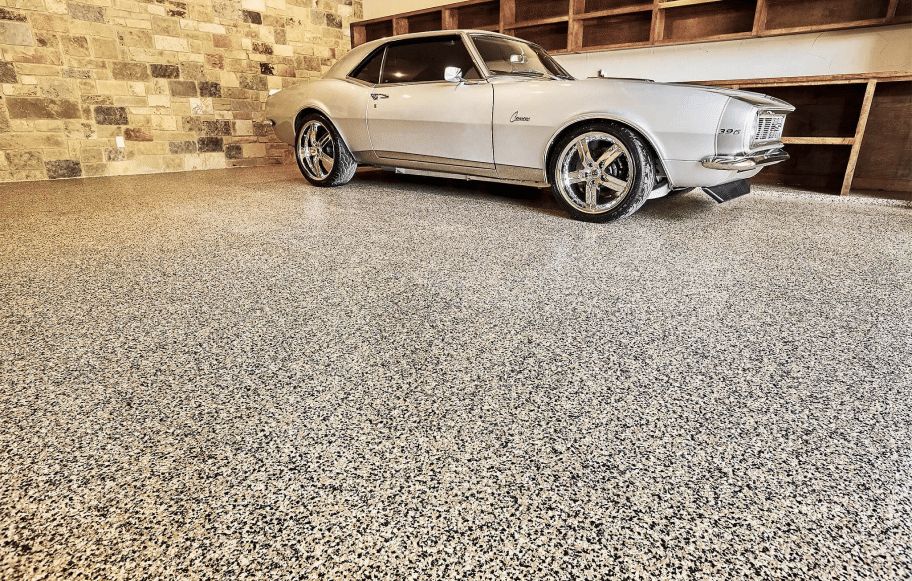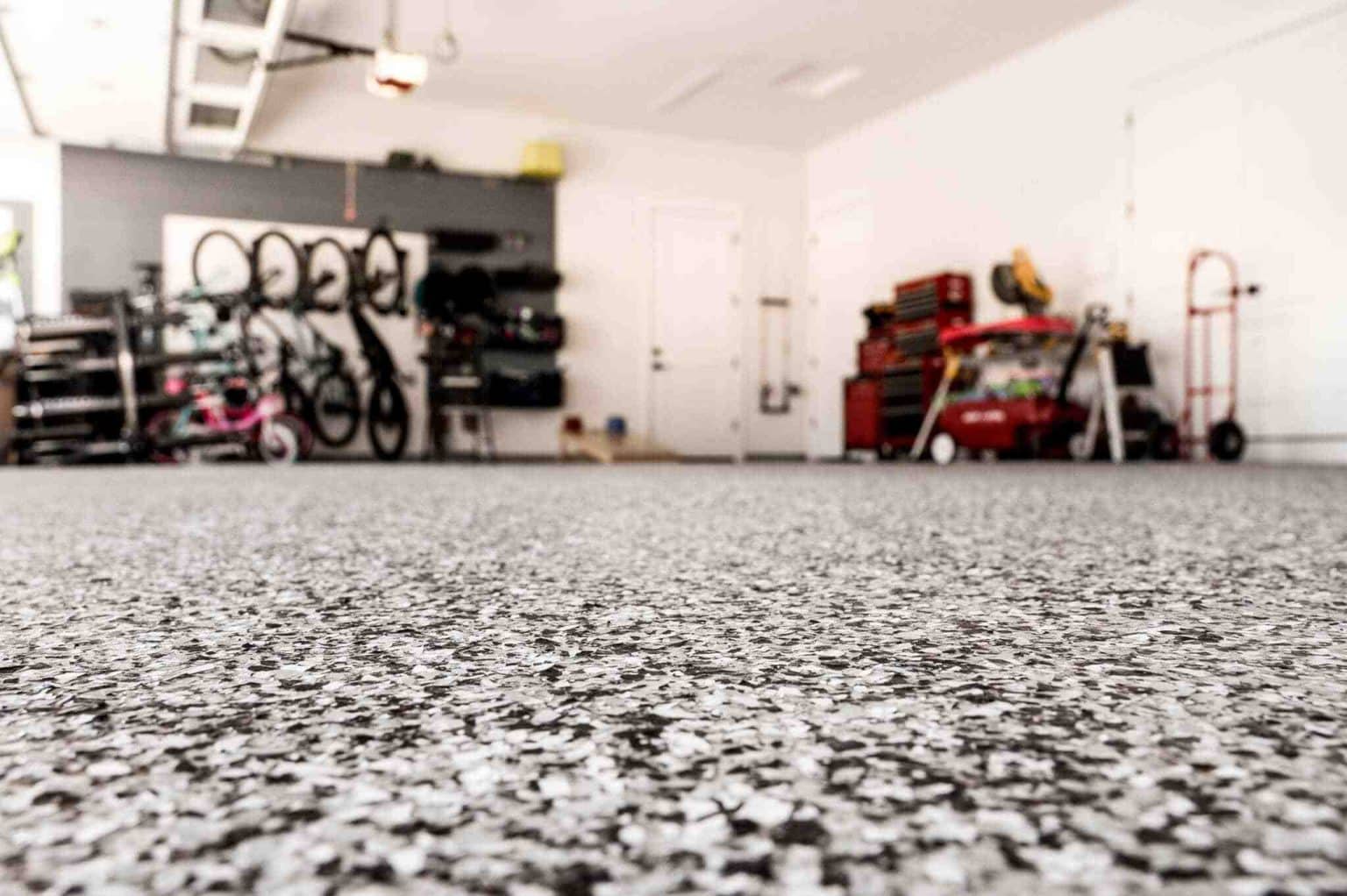

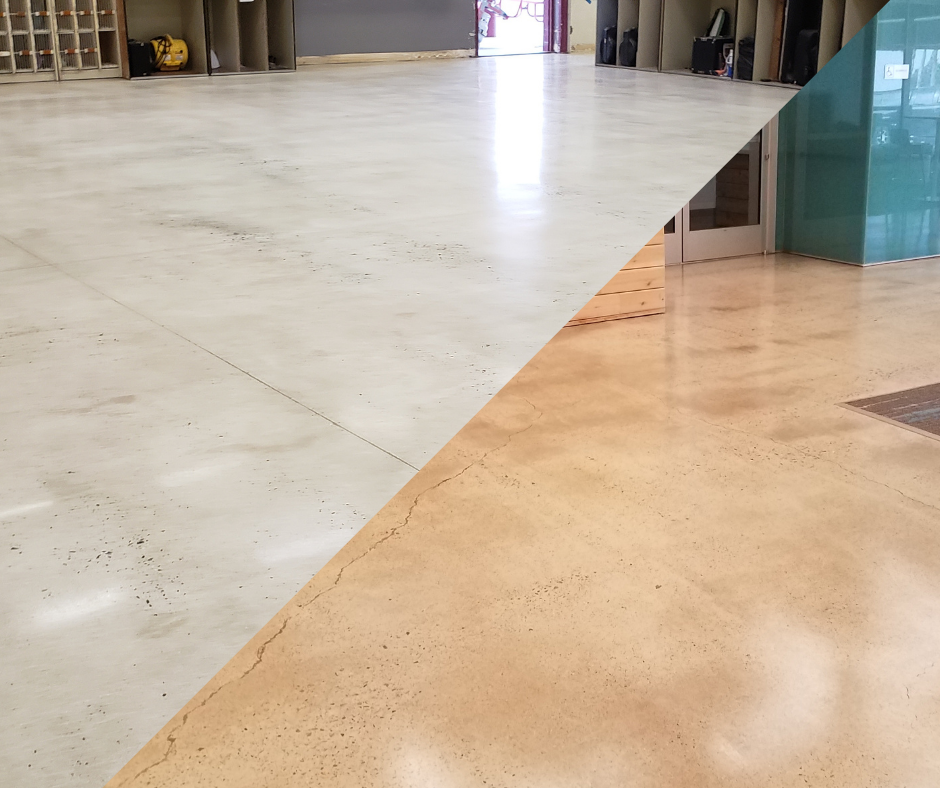
If you're looking into concrete flooring, you've probably come across two seemingly similar options: polished concrete and grind and seal. They might sound similar at first, but the results, maintenance, and cost can vary quite a bit.
At Roe Painting, we've worked with both systems in all kinds of spaces and have seen how the right choice can make a big difference in how a floor performs over time.
In this article, we'll walk you through the key differences so you can decide which option fits your space and your priorities.
We'll cover:
- What's the Difference Between Polished Concrete and Grind and Seal?
- Concrete Polishing vs. Grind and Seal: Key Differences
- Comparison Table: Concrete Polishing vs. Grind and Seal
- When You Should Choose Grind and Seal
- When You Should Choose Concrete Polishing
Article Summary:
Concrete polishing and grind and seal are two methods used to finish concrete floors, each offering different levels of durability, appearance, maintenance, and cost. Polishing refines the surface itself into a permanent finish, while grind and seal adds a protective coating over the concrete for adjustable gloss and traction.
What's the Difference Between Polished Concrete and Grind & Seal?
At a glance, polished concrete and grind and seal might seem interchangeable. Both involve grinding down the surface of a concrete slab to create a smooth finish. But the methods, materials, and results are very different.
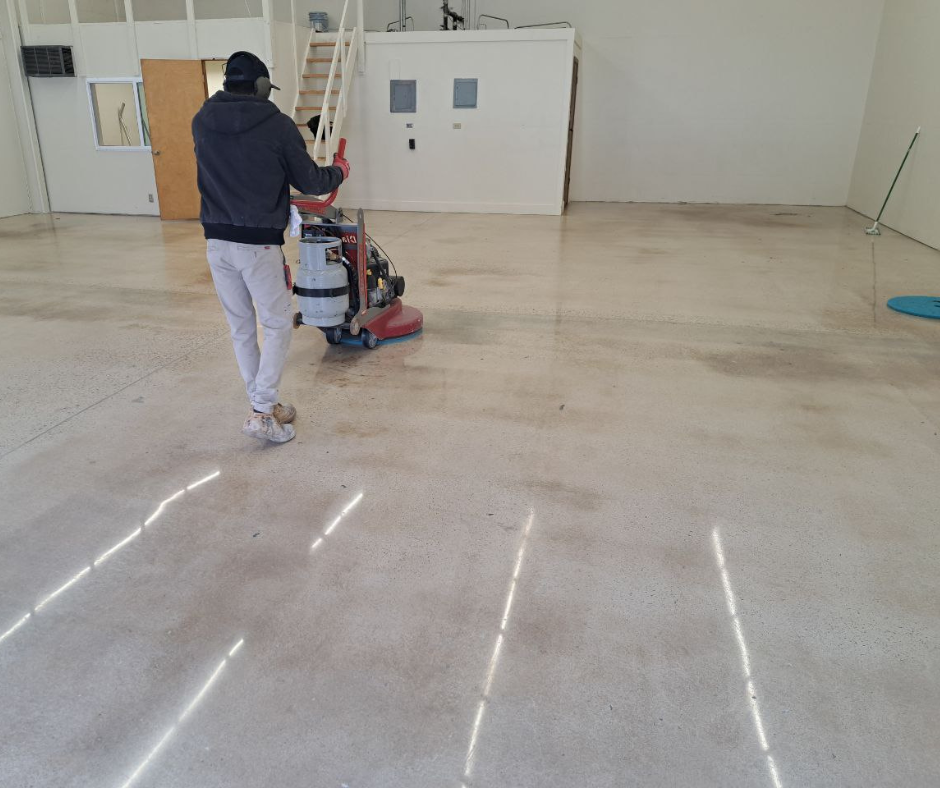
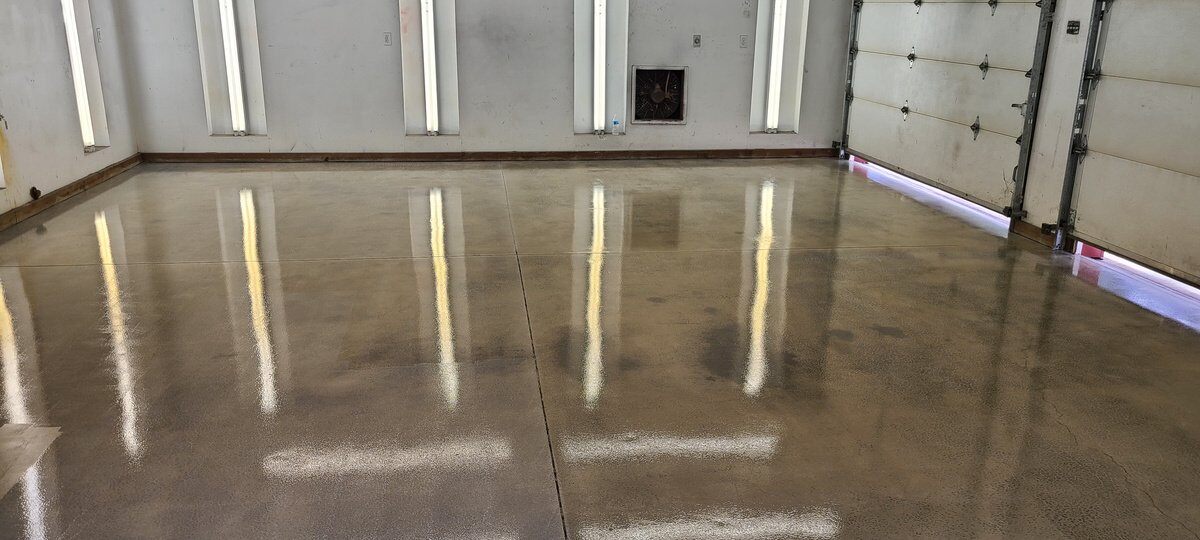
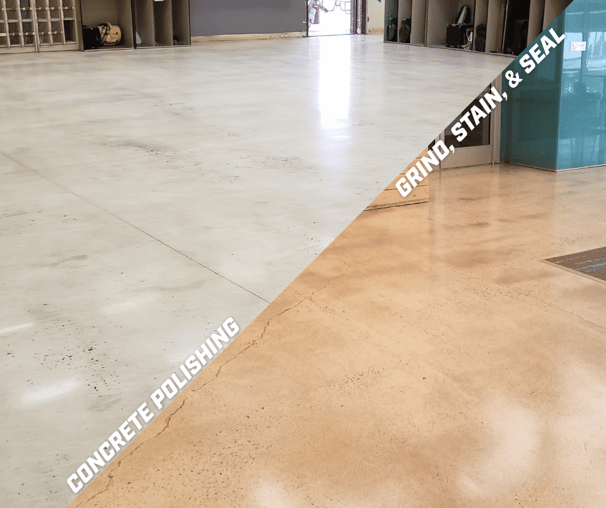
Polished concrete is a multi-step mechanical process that uses progressively finer grinding tools to refine the surface until it becomes dense, smooth, and glossy. It doesn't involve any topical coatings. Instead, the concrete itself is transformed into the finished floor. A densifier is used to harden the surface, and a guard or wax may be burnished in for added protection.
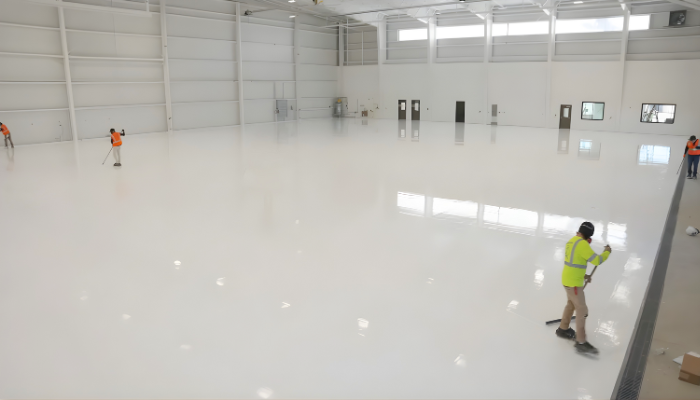
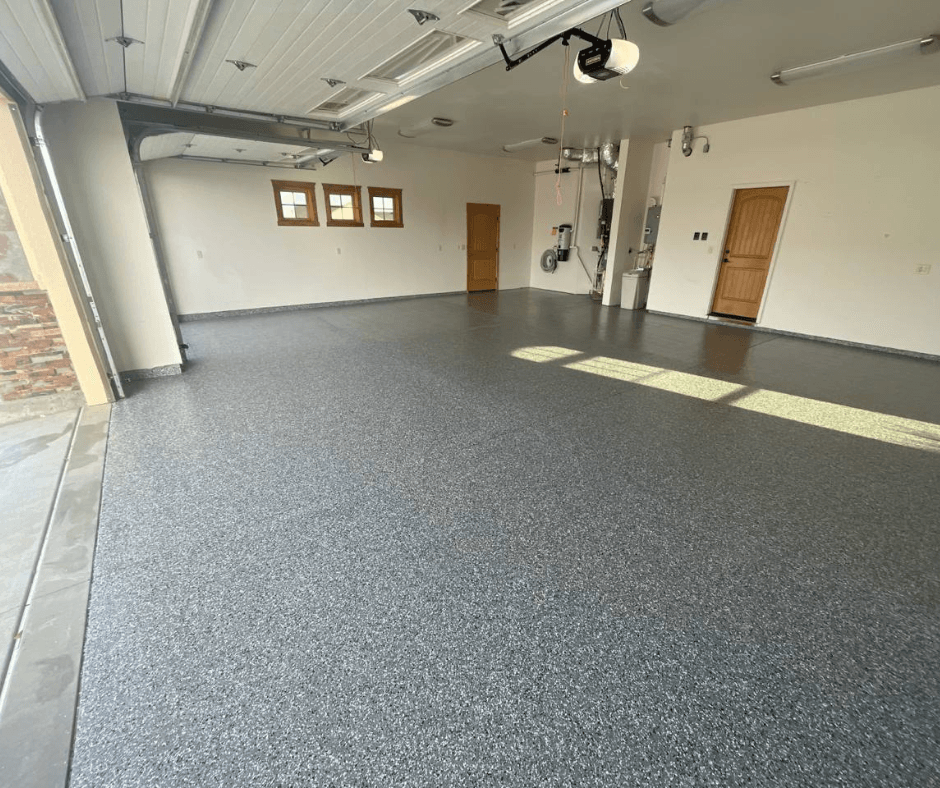
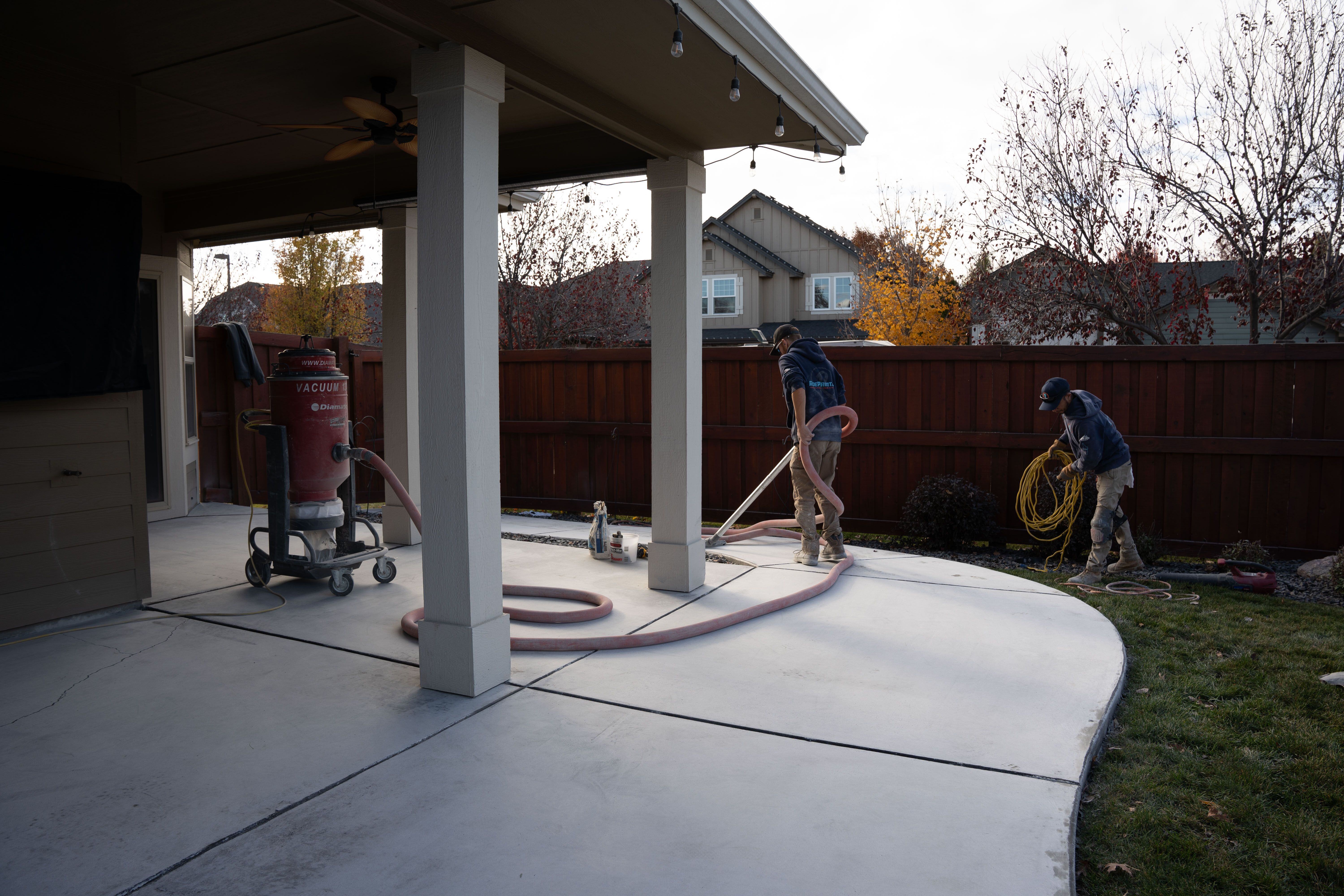
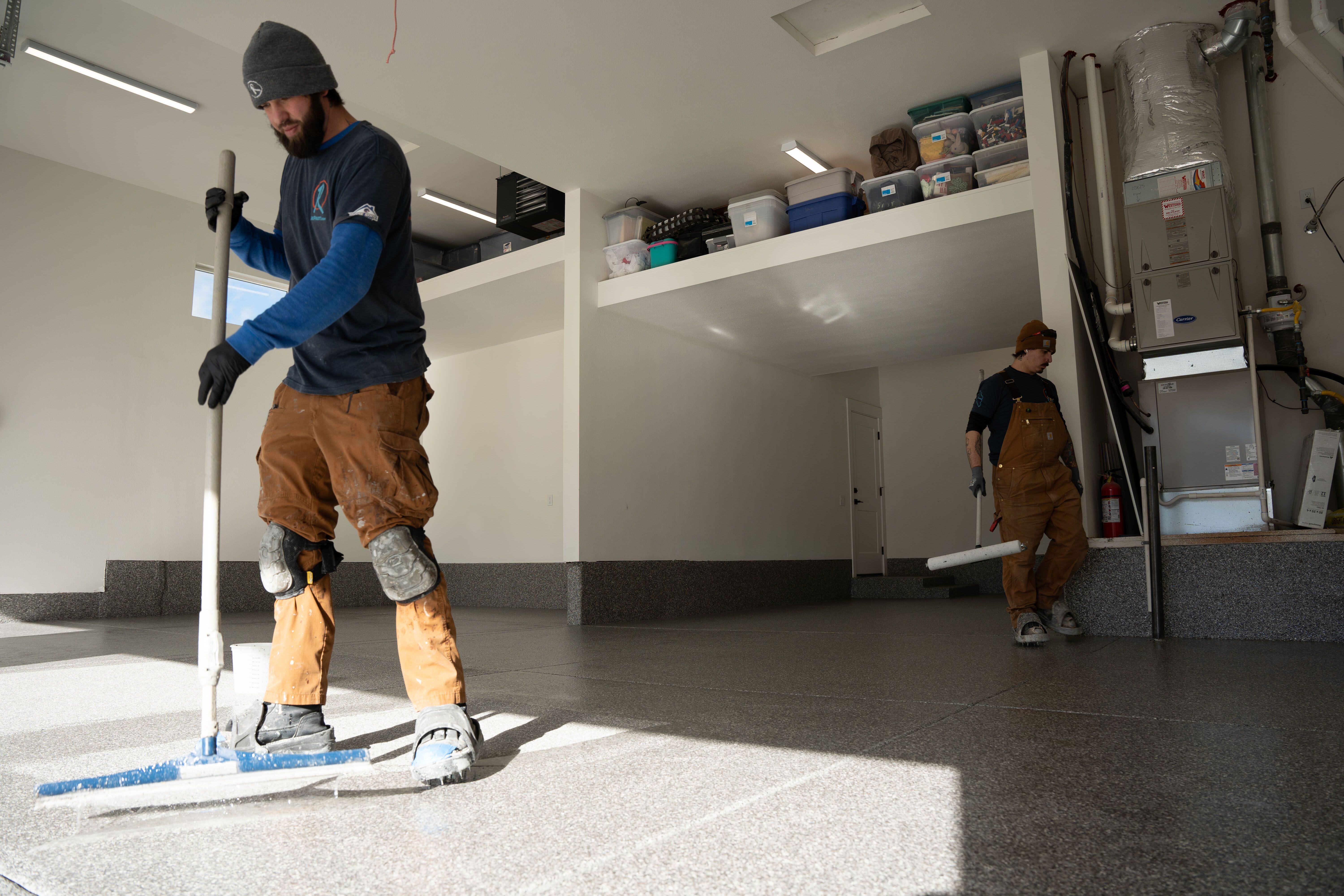
Grind and seal, on the other hand, involves just a few passes with a grinder to level and smooth the surface before applying a topical sealer, like a water-based epoxy or polyurethane. The sealer provides the sheen and protection. You can control the gloss level, add color or stain, and even include traction additives for slip resistance.
The main difference comes down to what creates the finish:
- In polished concrete, it's the slab itself.
- In grind and seal, it's the topical coating applied afterward.
Each system has its own strengths and ideal use cases. Next, we will break it all down.
Concrete Polishing vs. Grind & Seal: Key Differences
Durability and Lifespan
Polished concrete is extremely durable. The densified surface becomes part of the slab itself, making it highly resistant to wear, abrasion, and heavy foot or equipment traffic. When properly maintained, polished concrete can last the lifetime of the floor.
Grind and seal is less durable long-term. The topical sealer provides protection but will wear over time, especially in high-traffic areas. Most sealers will need to be reapplied every 5 to 10 years, depending on use.
Appearance and Gloss Level
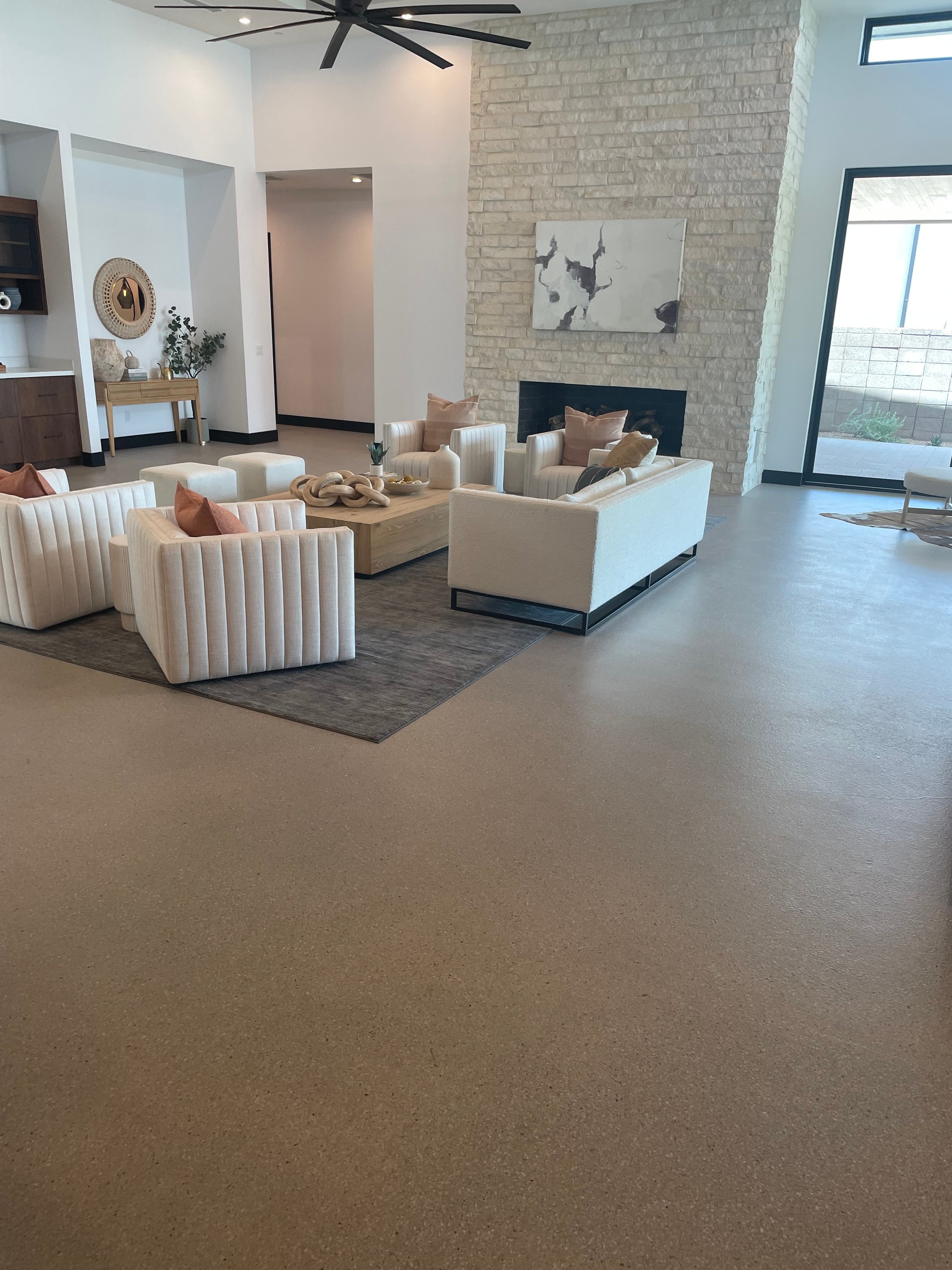
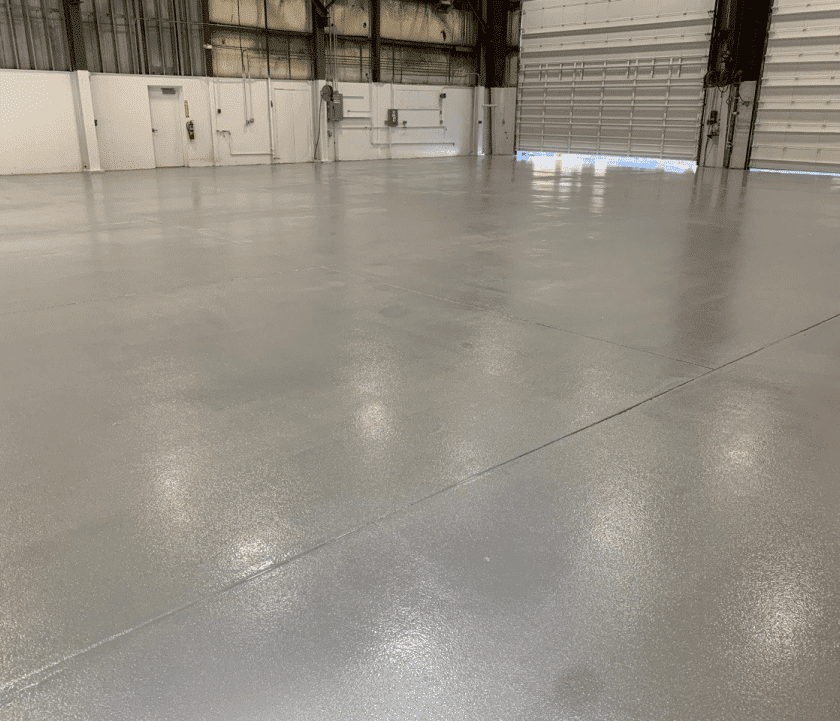
Polished concrete offers a high-gloss, reflective finish that enhances the raw look of the concrete. However, the gloss level is tied to the polishing process and can't be adjusted once complete. What you see is what you get.
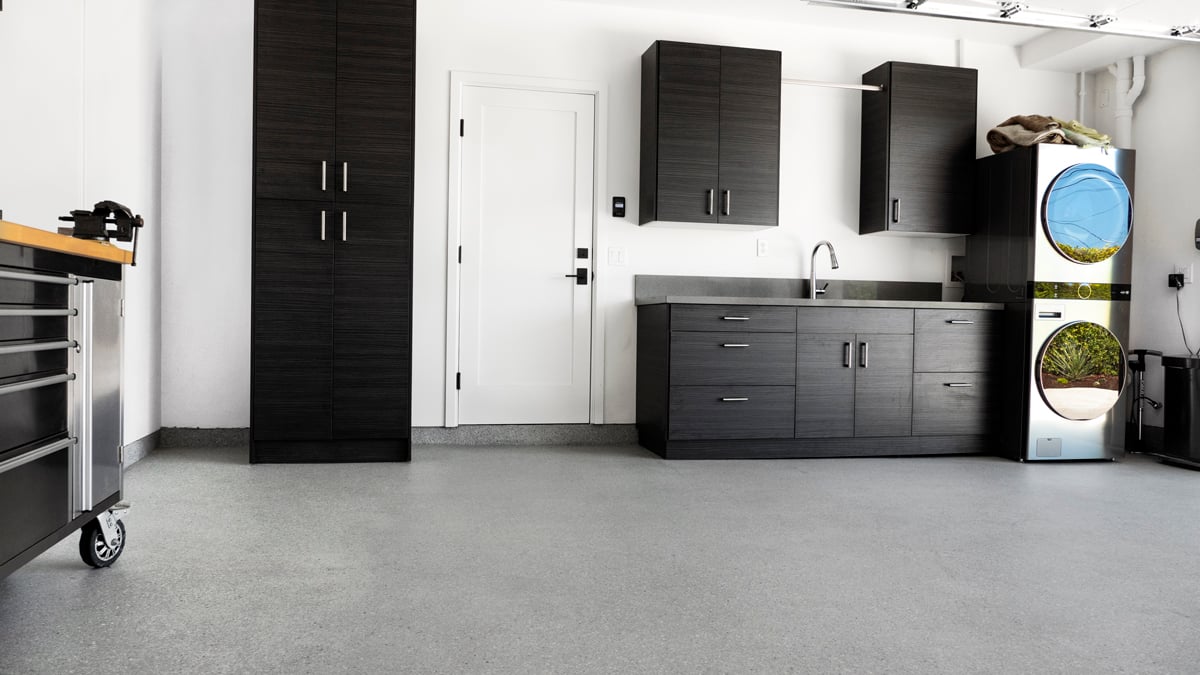
Grind and seal gives you more control over the final appearance. You can choose from matte, satin, or gloss finishes, apply stains for color, and even create decorative effects. The sealer determines the sheen, so it's more customizable.
Maintenance Needs
Polished concrete is extremely low-maintenance. There's no coating to worry about, so you won't need to reapply anything. Regular cleaning and occasional buffing are usually enough to maintain its shine.
Grind and seal needs more frequent upkeep. Over time, the sealer can wear down, especially in high-use areas. Reapplication may be required every few years to keep it looking and performing its best.
Traction and Safety
Polished concrete tends to be smoother and can become slick when wet. It doesn't allow for traction additives, which may be a concern in areas where slip resistance is important.
Grind and seal allows for more control over traction. Additives like grit can be mixed into the sealer to increase slip resistance, making it a better choice in environments where safety is a priority.
Installation Time and Down Time
Polished concrete is a longer process. It requires multiple grinding and polishing steps, densifier application, and sometimes burnishing. This adds time to the installation and may require more coordination with other trades.
Grind and seal is faster. With fewer grinding passes and simple sealer application, installation time is shorter, and the space can often be returned to service sooner.
Cost Differences
Polished concrete generally costs more upfront due to the labor and equipment involved. However, the long lifespan and minimal maintenance can make it cost-effective over time.
Grind and seal typically has a lower initial cost. It's faster, involves fewer steps, and uses more affordable materials. That said, future resealing costs should be factored in if you're thinking long-term.
Comparison Table: Concrete Polishing vs. Grind and Seal
Feature |
Concrete Polishing |
Grind and Seal |
| Durability | Extremely durable; part of the slab |
Moderate; depends on sealer lifespan |
| Lifespan | Lifetime with proper maintenance | 5-10 years before resealing is needed |
| Finish Type | Mechanical polish, no coating | Topical sealer provides finish |
| Gloss Level | High-gloss only (not adjustable) | Adjustable (matte, satin, gloss) |
| Color/Stain Options | Limited; natural concrete appearance | Stains and tints can be added |
| Traction Control | Not customizable; can be slippery when wet | Can include grit additives |
| Maintenance | Low; occasional buffing and regular cleaning | Higher; resealing needed over time |
| Installation Time | Longer; multi-step process | Faster; fewer steps and quicker return to service |
| Upfront Cost | Higher due to labor and equipment | Lower initial cost |
| Long-Term Cost | Low; minimal upkeep over time | Medium; factor in resealing costs every few years |
| Best For | High-traffic, long-term, low-maintenance spaces | Decorative, budget-conscious, or safety-sensitive applications |
When Should You Choose Grind and Seal?
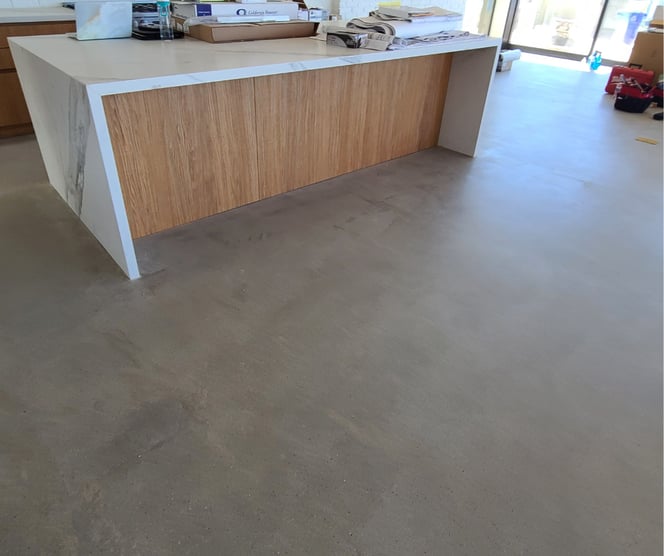
Grind and seal is a smart choice when budget, timeline, or design flexibility are driving the project. If you need a floor finished quickly, want to control the sheen or color, or need added traction in areas like entryways or kitchens, this system gives you options without overcomplicating the process.
It's also ideal for light to medium traffic spaces where reapplying a topcoat every few years isn't a dealbreaker.
When is Concrete Polishing the Better Option?
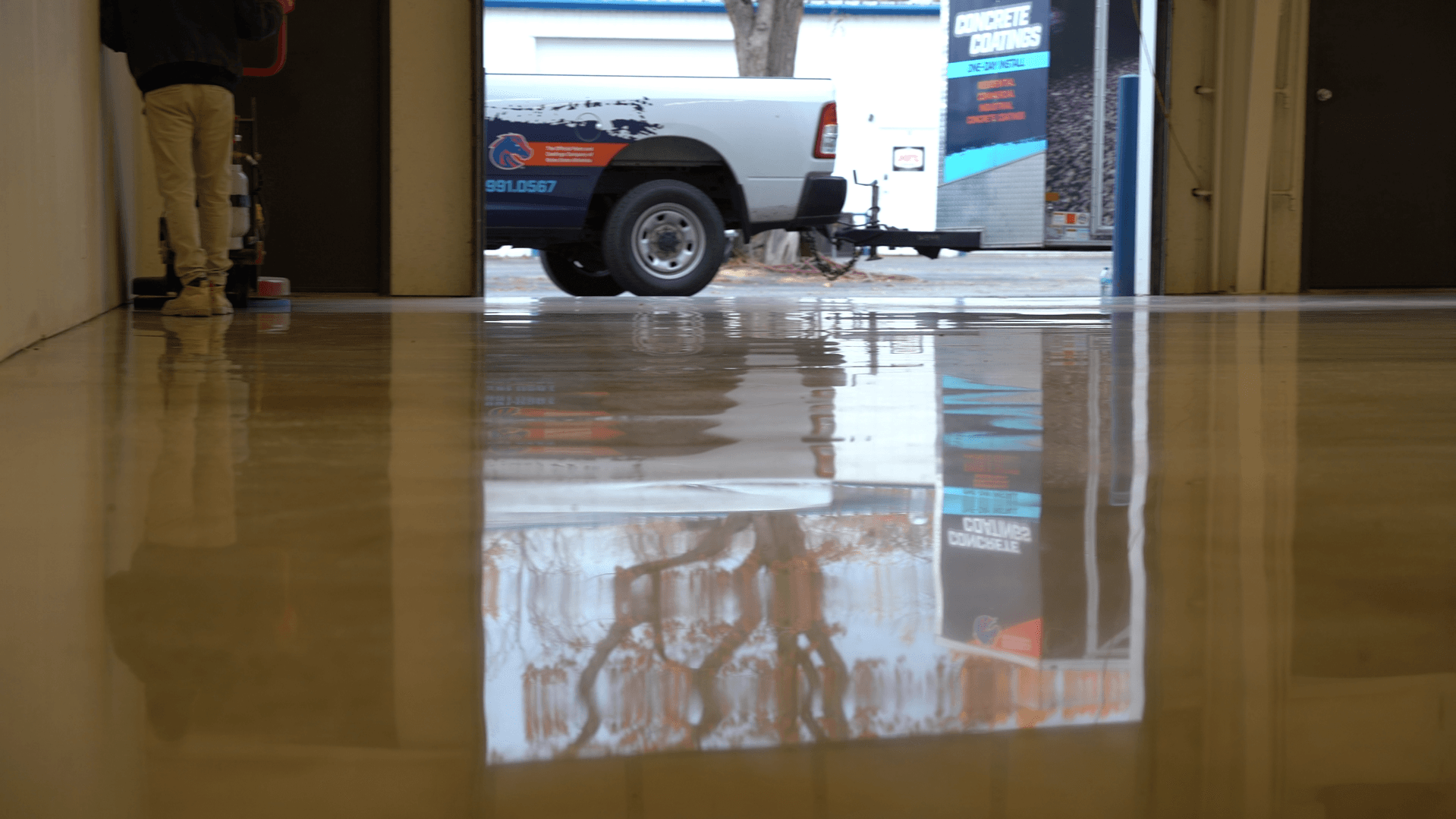
Concrete polishing is best when long-term durability, minimal maintenance, and a clean, natural look are priorities. If your slab is in good shape and you want a floor that can hold up to heavy use without peeling, flaking, or requiring reapplication, polishing delivers.
It's a strong fit for commercial spaces, warehouses, showrooms, and other environments where performance matters more than customization.
Making the Right Call for Your Floor
Both polished concrete and grind and seal can give you a sleek, durable floor, but they solve different problems. The best choice depends on your space, your goals, and how you want that floor to perform over time.
If you're still unsure which one fits your project, request a complimentary quote, and one of our concrete coating team members at Roe Painting can help you find the right answers and solutions for your floor.
Topics: