
If you're thinking about painting over stained wood, it's probably because your finish is feeling outdated, faded, or just doesn't match your space anymore. But before you grab that can of paint, there's a lot to consider because painting over stain isn't as straightforward as it sounds.
At Roe Painting, we've been helping homeowners for over 25 years transform stained wood surfaces into beautifully painted surfaces that last. We've also seen what can happen when the proper steps are skipped, and the frustrating results that follow.
In this article, you'll learn whether painting over stain is the right choice for your project, what can go wrong if it's done incorrectly, and how professionals approach the process for a high-quality, long-lasting finish.
We'll cover:
- Can You Paint Over Stained Wood?
- What Can Go Wrong If You Don't Prep Properly
- How Professional Painters Address Painting Over Stained Wood
- Is It Worth It to Paint Over Stain?
Article Summary:
Yes, you can paint over stained wood, but only if the surface is cleaned, sanded, and primed correctly. Without proper prep, the paint may peel, chip, or bleed through. This article explains when it’s worth painting over stain, what can go wrong, and how professional painters handle the process for lasting results.
Can You Paint Over Stained Wood?
Yes, you can paint over stained wood, but only if you prepare the surface correctly. Stain soaks into the wood grain, and finishes like glossy or oil-based stain are designed to repel moisture. That same quality also makes it difficult for paint to stick.
Thorough cleaning, sanding, and priming are essential. If you skip any of these steps, even the best paint can peel, chip, or bleed through within weeks.
Why You Might Be Considering Painting Over Stain
If stain no longer fits the look or feel of your home, here’s why paint might be the better choice:
- To update the look
- To match other finishes
- To cover damage or inconsistencies
- To brighten the space
- To increase the time between maintenance coats
Paint can give wood surfaces a completely new look without replacing them, if it's applied the right way.
What Can Go Wrong If You Don't Prep Properly
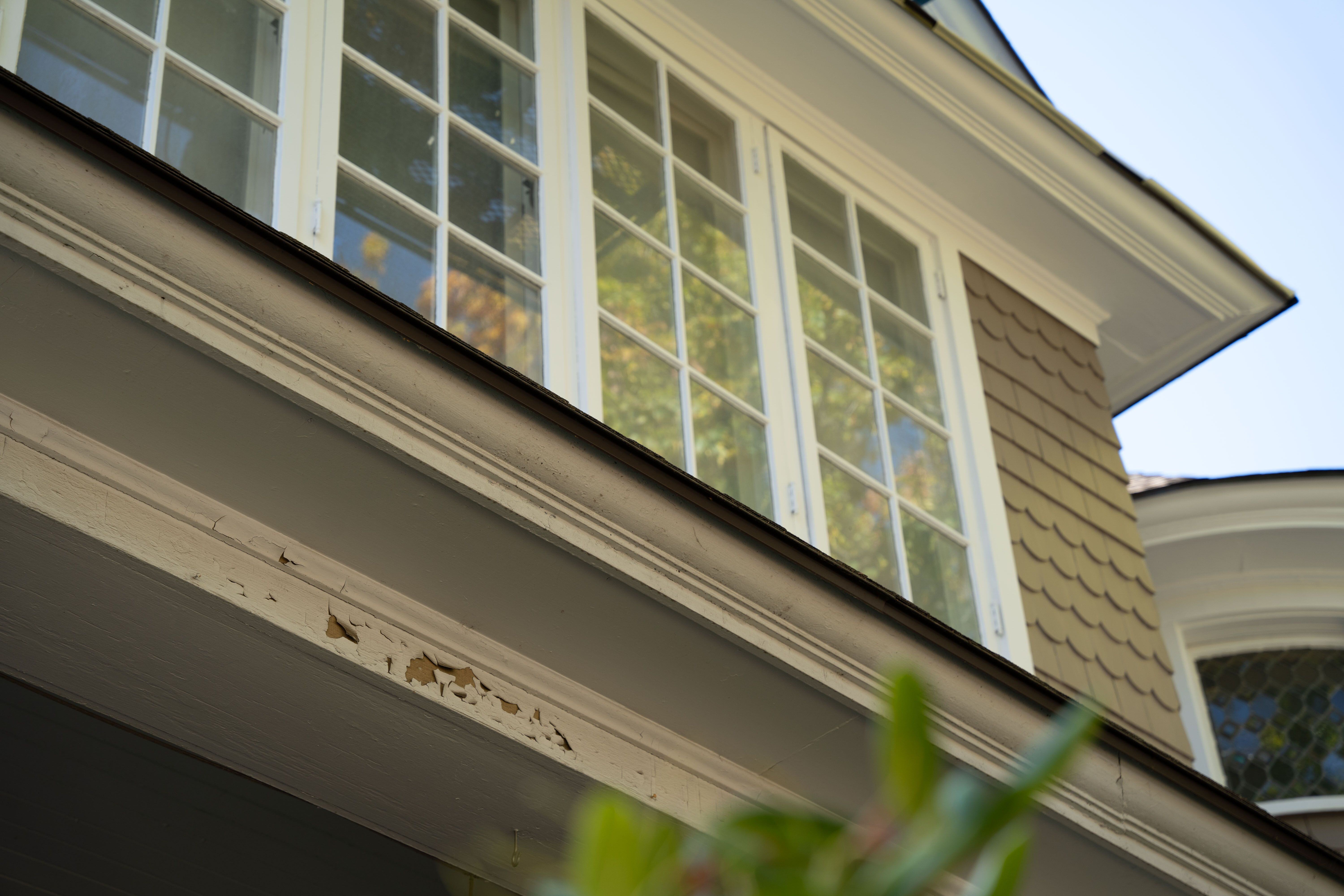
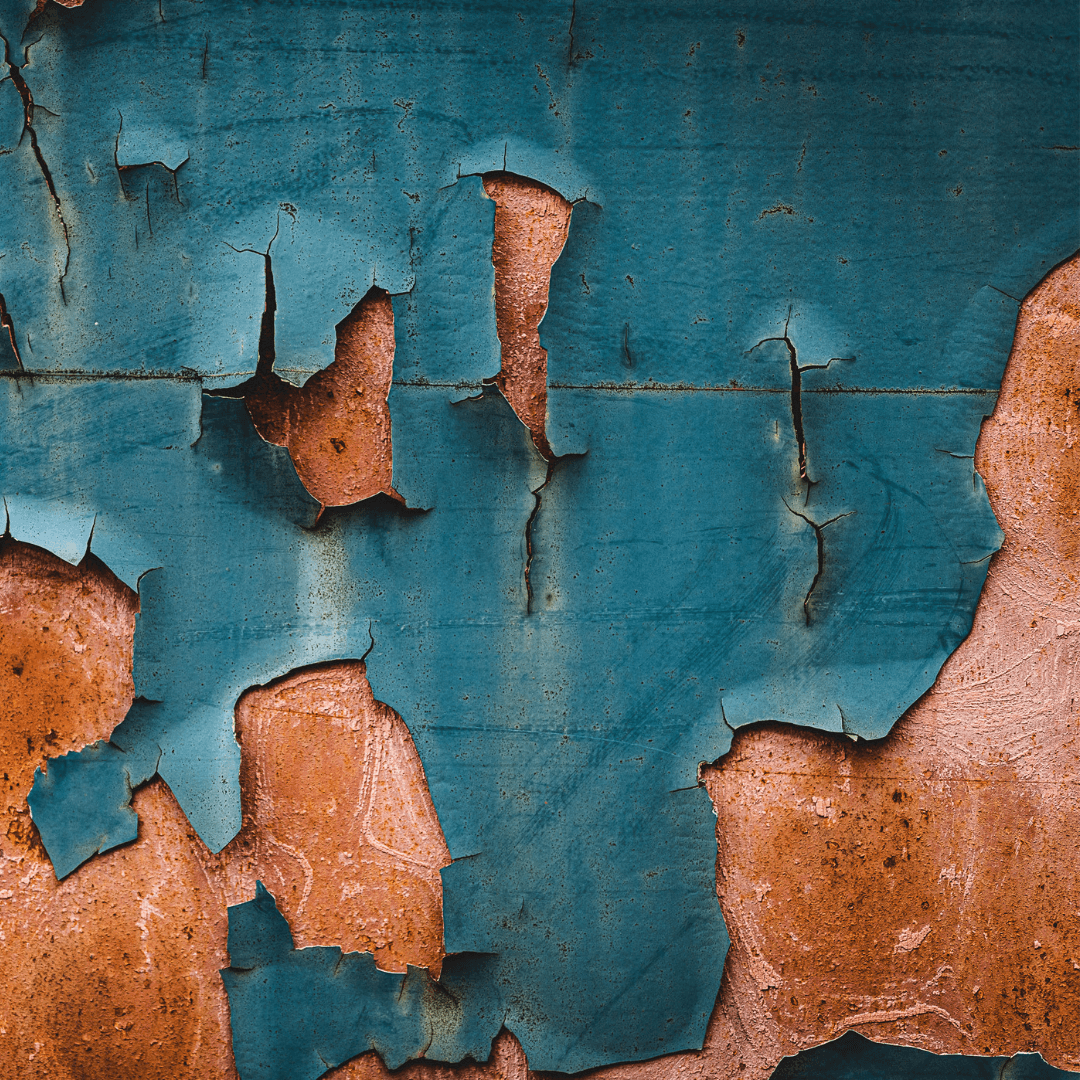
The biggest risk of painting over stain without proper prep is failures that show quickly. On exterior surfaces like decks or front doors, peeling and flaking can start after just a few weeks of exposure to sun, rain, and temperature changes. Indoors, you might see chipping on high-touch surfaces like cabinets, trim, or handrails.
Uneven absorption is another common problem. If the wood wasn't cleaned or sanded thoroughly, the paint may go on patchy, streaky, or blotchy. This is especially noticeable on large, flat surfaces like cabinet doors or wood paneling.
In some cases, stain bleed-through can discolor your paint completely. This is often caused by tannins in the wood or residual oils from the original finish. You might see yellowing, brown streaks, or an overall dingy tone, even under multiple coats of paint.
These issues not only affect how the finish looks, but also how long it lasts. And once the paint begins to fail, fixing it usually means having to start over from scratch.
How Professional Painters Approach Painting Over Stain
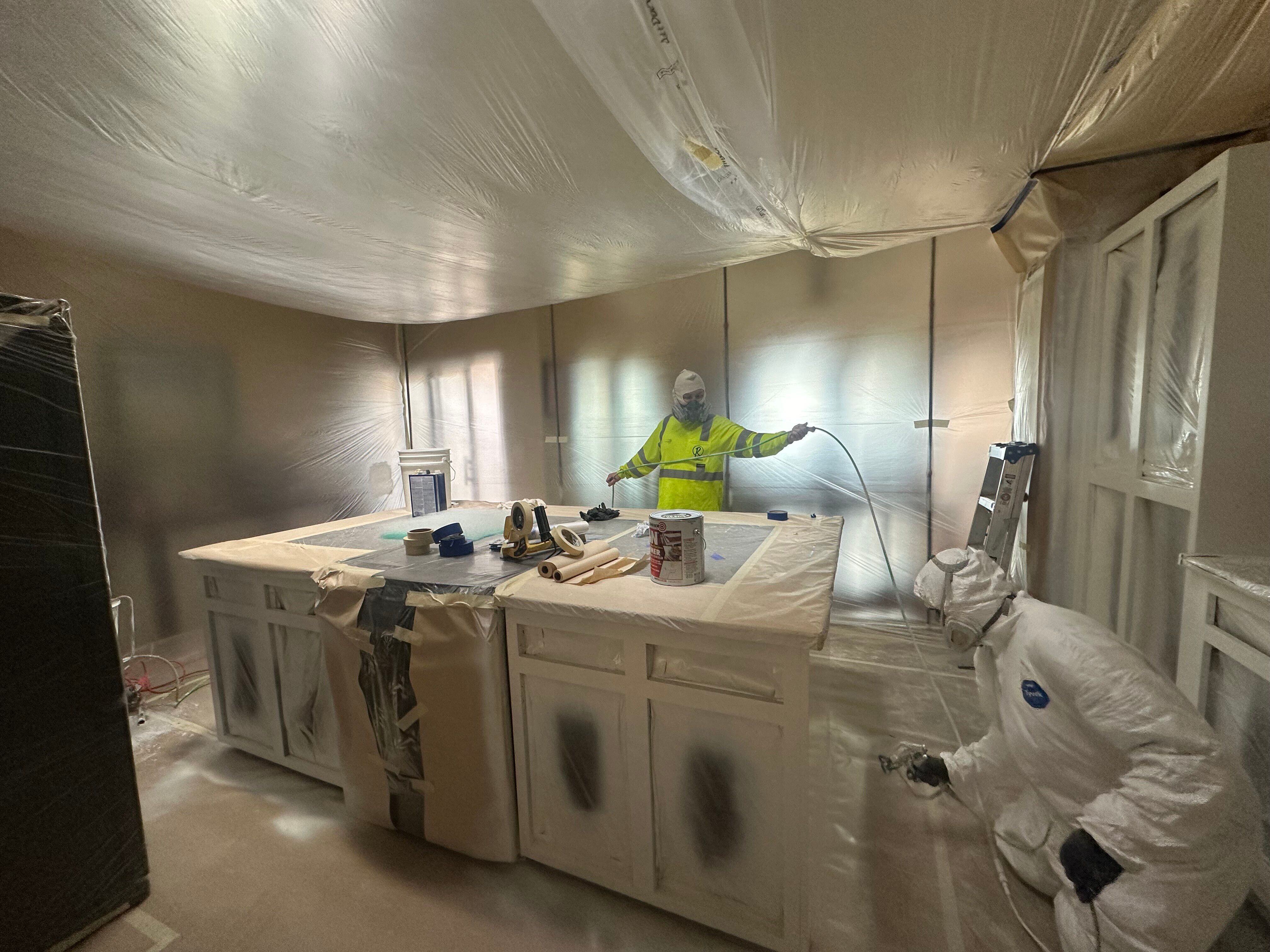
Pro painters follow a proven process to make sure the paint adheres properly, and the final finish looks smooth, even, and long-lasting. While the specific approach may vary slightly depending on whether we're working on an interior surface like cabinets or an exterior surface, like a stained door, the core prep steps remain the same.
1. Clean the surface thoroughly to remove dirt, dust, wax, and oils.
2. Degloss or sand the surface so primer can grip.
3. Repair any damage and sand smooth.
4. Prime with the right bonding primer for the surface.
5. Inspect primer for full coverage.
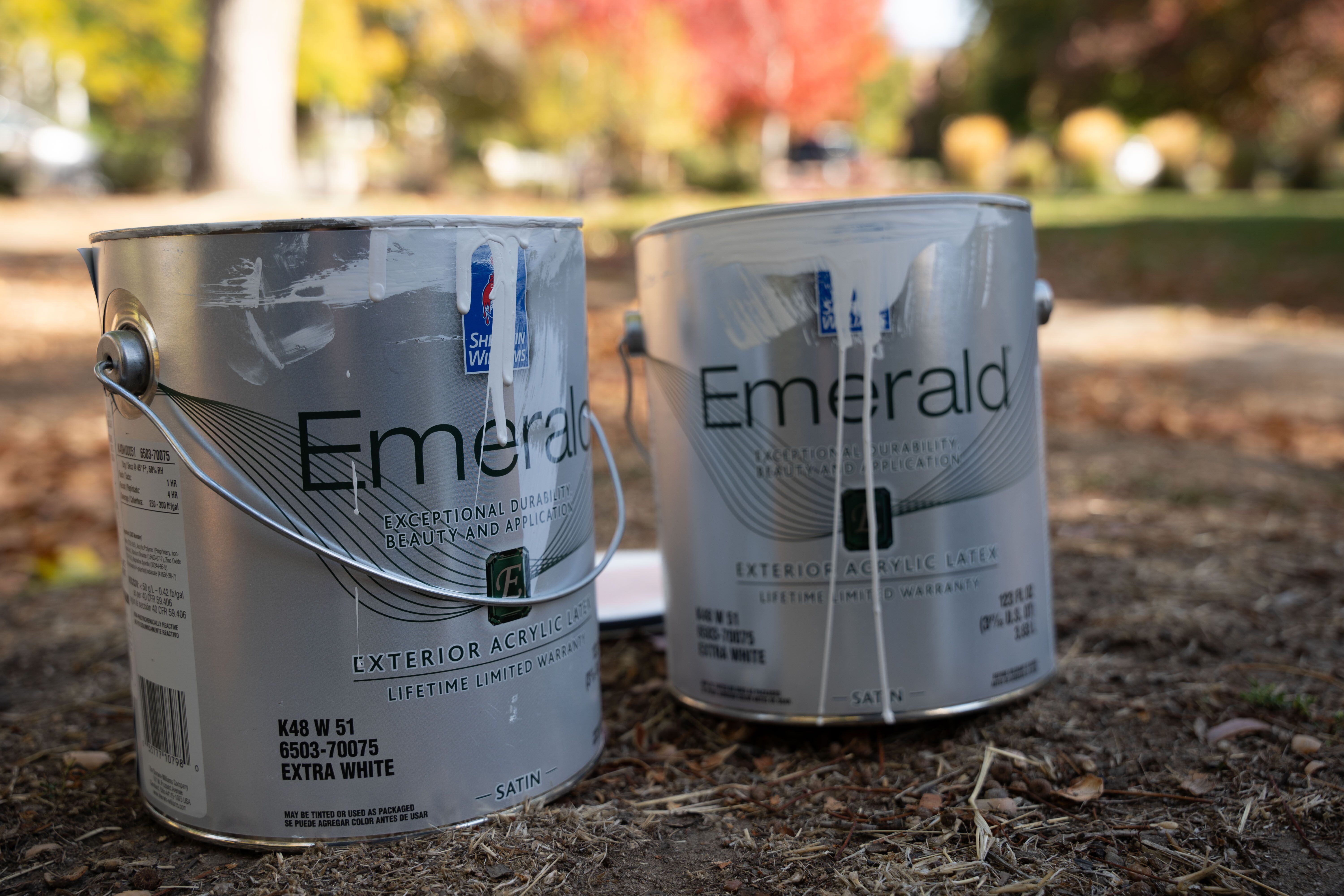
6. Apply a high-quality paint suitable for the surface and conditions.
Each step is critical to ensure the success of the paint. Cutting corners can result in bubbly, cracking, or peeling paint.

Is It Worth Painting Over Stain?
Painting over stain can completely transform the look of your space, but it may or may not be the right call. Before you commit, it's important to think about the surface you're working with and your expectations for the final result.
Consider this before you swap that stain for paint:
- Condition of the wood: If the surface is damaged, warped, or deteriorating, paint may not solve the problem. In some cases, replacement or refinishing might be a better long-term solution.
- Level of gloss or sealant: Heavily sealed, lacquered, or oil-based stains are more difficult to paint over and require more aggressive prep.
- Project location: Interior surfaces like cabinets, doors, and trim tend to be more forgiving and easier to control. Exterior surfaces like decks or doors face sun, moisture, and temperature swings that make proper prep even more important.
- Desired look: If you're expecting a flawless painted finish, stained wood grain and texture can sometimes show through unless the surface is fully filled and smoothed.
- Time and cost: Done correctly, painting over stain takes time, tools, and professional-grade materials. Cutting corners usually leads to early failure and costly rework.
If the surface is in good shape and you're committed to proper prep, painting over stain can absolutely be worth it. You can modernize the space, brighten up dark wood, and give your home a fresh, updated look without full replacement.
Benefits of Choosing Paint Over Stain
Beyond just aesthetics, there are several practical advantages to painting over stained wood:
- Full color control: Match any room or design style with solid, consistent coverage.
- Better UV protection: Quality paint resists fading better than most stains.
- Low-maintenance: Easier to clean and touch up over time.
- Hides flaws: Covers minor imperfections and uneven wood tones.
Stain still has its place, and depending on the type of stain you choose, you still can have some color control and thicker coverage.
Painting Over Stain Can Work (If You Do It Right)
If the surface is in good shape and you're willing to invest in the prep, paint can be a smart way to update your space without full replacement. If not, you're likely to run into peeling, patchiness, or bleed-through that creates more problems down the road.
Not sure which way to go? Check out this article about paint vs. stain that dives into the differences and benefits of each coating type.
Roe Painting has helped homeowners make these choices for over 25 years. We're here to help. Request a complimentary estimate for more support on how we can help you bring your project to life.